

February 26, 2026
By Tori Curbelo, with Julianne Will
Human trafficking doesn’t happen in a vacuum. It thrives in systems that have long devalued certain lives and certain labor. If we want to protect people from exploitation and prevent trafficking before it happens, we need to understand the intersection of race and trafficking — and the historical and structural forces that continue to shape vulnerability today.
Racism isn’t a side issue in the fight against trafficking. It’s woven into the history of labor exploitation in the United States and embedded in many of the systems that traffickers still exploit.
The Evolution of Exploitation
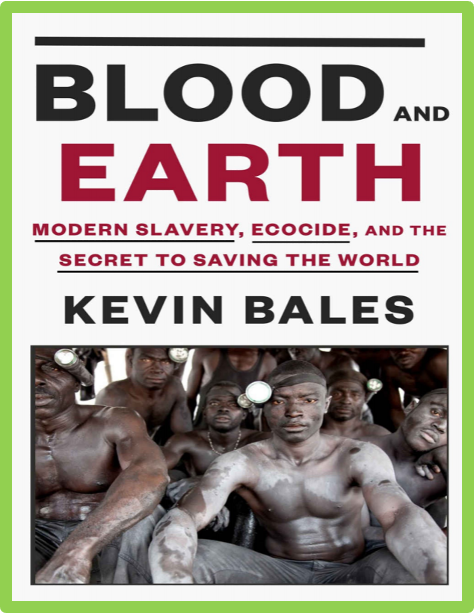
In Blood and Earth, Kevin Bales documents how exploitation did not disappear with the legal end of slavery. It evolved.1 One of the clearest examples is the convict leasing system used in 1880s Alabama.
 After the Civil War, the 13th Amendment formally abolished slavery — except as punishment for a crime. Under Jim Crow laws, African Americans were arrested for “crimes” such as hitching a ride on a train or “cussin’” in public. In practice, this made it illegal to be Black and poor.
When defendants couldn’t pay court fines, local officials or businessmen would pay the debt in exchange for the person’s forced labor. This debt exchange created a pipeline from arrest to exploitation.
Large corporations, including U.S. Steel, built a massive market for this labor. By signaling to local sheriffs that they would buy as many “prisoners” as could be arrested, corporations helped create a state-sanctioned system of racialized forced labor.2
This was not simply individual racism. It was systemic profit. Local officials and industries built fortunes on the backs of re-enslaved men.
Because these men were classified as “convicts” rather than “slaves,” the full scale of this human rights atrocity was buried for decades. The language changed; the exploitation did not.
Understanding this history matters because it reveals a pattern: When systems criminalize and dehumanize people, exploitation follows.
The 13th Amendment and the “Punishment Clause” Loophole
The 13th Amendment abolished slavery “except as punishment for a crime.” This punishment clause remains embedded in the Constitution — and it continues to shape labor practices in U.S. prisons.
Globally, of the estimated 50 million people forced to work against their will or in a marriage that they were forced into, roughly 4 million are in state-imposed forced labor.3
In the United States, prison labor is part of this broader reality. Six states — Arkansas, Georgia, Mississippi, South Carolina, Texas and Alabama — still pay incarcerated workers nothing for their labor.4
Seventy-six percent of prison workers report being forced to work under threat of punishment such as solitary confinement or loss of family visits.5
The racial disparities are stark. Black Americans make up 14 percent of the U.S. population but 37 percent of the prison population.6 The system continues to disproportionately target and profit from Black bodies.
When work is compelled under threat and people have no meaningful choice, the line between incarceration and exploitation becomes dangerously thin. For those working to end trafficking, this raises urgent questions about how we define forced labor and how we confront systems that normalize it.
Understanding this history matters because it reveals a pattern: When systems criminalize and dehumanize people, exploitation follows.
Why This Matters for Protection and Prevention
If we focus only on individual traffickers, we miss the larger picture. Trafficking is sustained by systems that:
- Criminalize poverty
- Disproportionately police and incarcerate Black communities
- Normalize unpaid or coerced labor
Prevention requires more than awareness campaigns. It requires systemic change.
To protect people from trafficking, we must:
- Address racial disparities in policing and incarceration
- Examine prison labor practices and the ongoing impact of the 13th Amendment’s punishment clause
- Strengthen worker protections and access to justice
Racial justice is trafficking prevention. When communities are overpoliced, underprotected and economically marginalized, traffickers find opportunity. When workers have rights, mobility and protection under the law, traffickers lose power.
At LifeWay Network, we believe in survivor-centered solutions and systemic change. To truly end trafficking, we must confront the historic and ongoing inequities that make exploitation possible in the first place. Trafficking is about power and profit. Race has shaped who is denied power and whose labor is exploited for profit for centuries.
If we want to build a future where every person is free from exploitation, we must tell the full story — and work to dismantle the systems that allow exploitation to evolve rather than disappear.
Further Learning
- The movie “13th” provides an in-depth look at the prison system in the United States and how it reveals the nation’s history of racial inequality: www.imdb.com/title/tt5895028/
- The Prison Policy Initiative is a comprehensive resource for research and statistics on racial and ethnic disparities in the criminal legal system: www.prisonpolicy.org/research/racial_and_ethnic_disparities
Sources
- Kevin Bales, Blood and Earth: Modern Slavery, Ecocide, and the Secret to Saving the World (Spiegel & Grau, 2016).
- Ellen Terrell, “The Convict Leasing System: Slavery in its Worst Aspects,” Library of Congress, June 17, 2021. https://blogs.loc.gov/inside_adams/2021/06/convict-leasing-system/
- International Labour Organization, Walk Free and International Organization for Migration, Global Estimates of Modern Slavery: Forced Labour and Forced Marriage, 2022. https:/www.ilo.org/global/publications/books/WCMS_854733/lang–en/index.htm
- Daniel Perez and Bianca Tylek, “Rooted in Racism: Prison Labor Exploitation,” Economic Policy Institute, 2024.
https://www.epi.org/publication/rooted-racism-prison-labor/ - “U.S. prison labor programs violate fundamental human rights, new report finds,” University of Chicago News, June 16, 2022. https://news.uchicago.edu/story/us-prison-labor-programs-violate-fundamental-human-rights-new-report-finds
- Alex Resney, “Mass Incarceration in the United States,” Ballard Brief, Winter 2019. https://ballardbrief.byu.edu/issue-briefs/mass-incarceration-in-the-united-states.